
The words that arrived after I did
An essay on translation, polyamory vocabulary, and a glossary I half-distrust.
We were inside a cafe out of the cold, and Anna was telling me about her daughter’s tennis season. Anna is a stylist who dresses a conservative bunch, and her clientele matches her: groomed, low volume, hair always done. Her husband is in finance. Anna and I love each other tenderly. We meet for what we call beautiful girly lunches. The cafe was warm. The windows had steamed over, and the pedestrians outside moved past as hurrying smudges.
I was describing the new shape of my marriage to her. At some point I reached for a word. Something starting with meta-. Anna stopped chewing and said, what is that? In the half second between her question and my answer, I heard the word as Anna heard it. It sounded like cult vocabulary. It sounded like I was reading from a wiki at a dinner table. Anna kept her face open and tender, the way you do with a friend who has wandered somewhere strange, and I felt my own face try to stay still.
The vocabulary was not the problem.
I find the terms useful. They compress an explanation that would otherwise take three sentences. They come from books I admire, written by authors I trust. What’s difficult is what the words come pre-loaded with. Google any of them and you arrive somewhere specific: a specific aesthetic, a specific politics, a specific way of dressing and speaking and signalling. The terms travel with their cultural package, and the package does not fit me. Using them out loud makes me sound like I have subscribed to a belief bundle I have not subscribed to. It is one of the things that bothers me about the present moment generally. The way certain words ask you to declare allegiance to a whole position before you are allowed to use them.
I have nothing against the people inside the package. The piercings, the spiritual journey, the activist vocabulary, the kink-adjacency. They are simply not me. I am a forty-six year old woman who grew up between two countries and has lived in Amsterdam for the rest of it. I have no purple hair. I am not on a journey. The words and I keep finding each other in the wrong room.
……………….
To understand the flinch you have to understand the languages I came through.
I was born in the Soviet Union. In the world I grew up in there were almost no words for what I am now trying to describe. There was one. Swedish family. It meant anything: a love triangle, three adults under one roof, any house where two beds were not enough. It was a verdict in the shape of a description. Swedish was Soviet shorthand for foreign and modern, possibly indecent. The phrase was always said with a face. A small wince, or a small smile that wasn’t kind.
In the world I grew up in, nobody divorced. My parents stayed together. My grandparents stayed together. The block of flats around us held marriages from before I was born, intact in a way I now find suspect, and at the time I almost wished my own home had been broken so I could see what other ways of living looked like. My mother still tells me, we had real love. She means that what I am doing is not real love. She means it gently. She means it as a verdict.
The silence in Russian had weight. It was loud. Movie kisses with my parents in the room rang in the air for minutes afterwards. There was nothing to say so we said nothing, and the saying-nothing took up so much space it became its own language.
The second silence was Hebrew. I lived inside a traditional family inside a traditional culture, and I left at eighteen, before I would have started dating in earnest. I cannot think of one Hebrew word that named what I would later try to describe. The Hebrew silence is a one-line in this essay because it was a one-line in my life. A second silence stacked on top of the first.
I came to Amsterdam in my early twenties. My friends here are mostly English-speaking. My Dutch is functional. I have used it to buy bread and apologise. The vocabulary of the relationships I am now in lives almost entirely in English. The Dutch terms are mostly imports. The vocabulary I was given is not in any of my first languages.
……………….
The books arrived in my life the way they often arrive. Quietly, through a marriage that had begun asking itself questions it had not asked before. The classics: The Ethical Slut and Mating in Captivity. I read them in English in our kitchen in Amsterdam, and what I found in them was not new information.
It was language for something I had been suspecting since I was very young.
When I was a teenager I avoided serious relationships because I thought they would limit me. I wanted a rich and full life, and I could not understand how a person was expected to have more children, more friends, more careers, more languages, more cities, more grief, more griefs again, but only one partner. I did not have words for it then. I lived without words for it badly, the way one does. The books named a disposition I had been living without knowing it had a name.
Which makes the flinch, when it comes, complicated. Sometimes a word fits me. It maps back to a feeling I have had for thirty years, and I exhale. Other times a word doesn’t fit me. It puts me inside a tribe I have never visited. The same vocabulary keeps doing both. Whether the words help depends entirely on whether they reach for something already there.
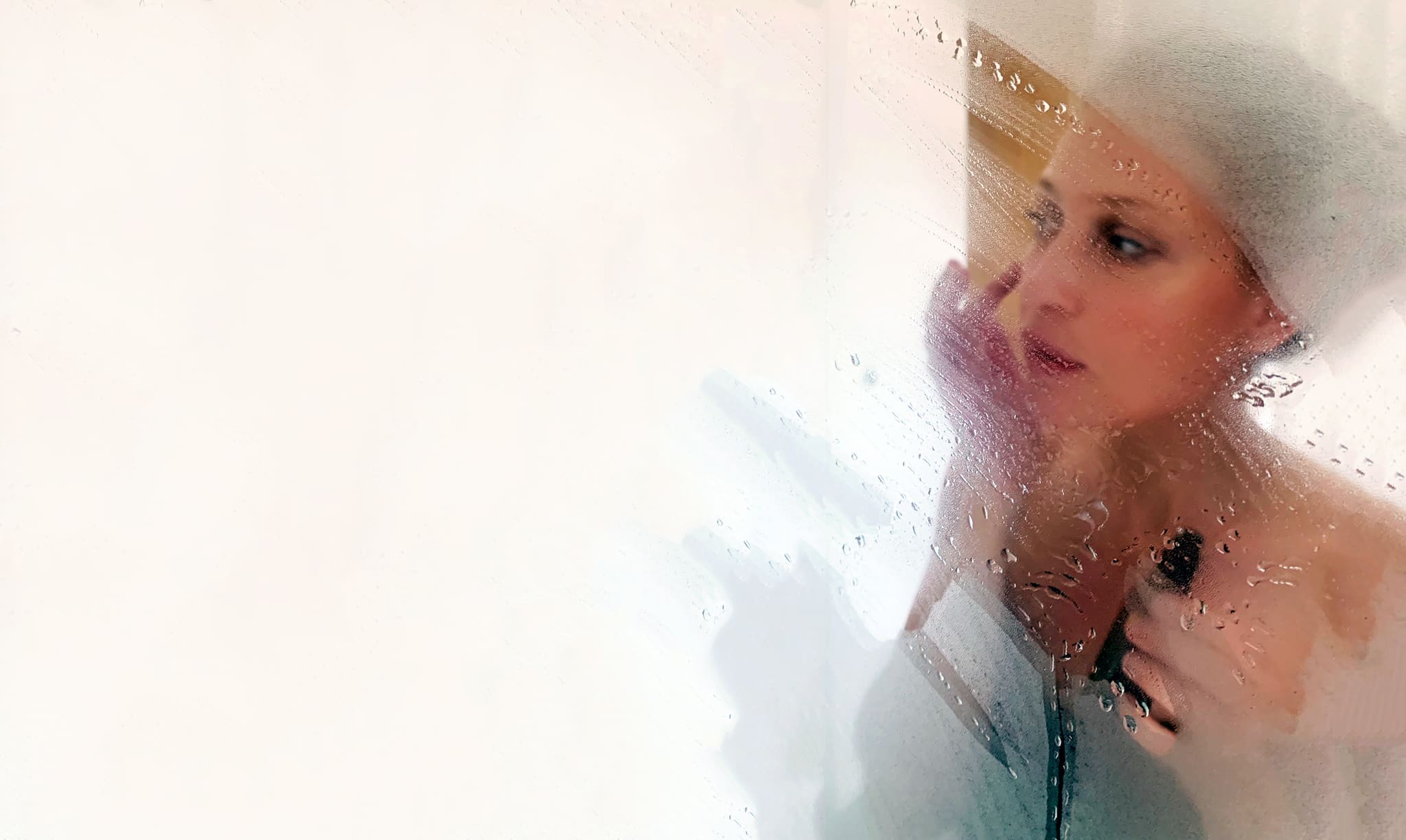
Some months later I stood at my bathroom mirror, putting on eyeliner before my first polyamorous meet-up. I rehearsed the word out loud.
Polycule. Polycule. Polycule.
It rolled strangely off my tongue. It sounded like follicle. Slightly dermatological. Polycule. What is a polycule? Am I in one? Am I in a polycule if my partner has dated someone once and stopped? Am I in a polycule if I love a friend tenderly but have never touched her? What counts? What does not count?
I finished the second eye. We are more than these definitions.
Three words that don’t fit my mouth
There are three terms in the glossary I do not say without flinching.
The first is ethical. As in ethical non-monogamy. The biggest ick factor I have in this vocabulary. Ethical asks me to keep proving I am being ethical enough. It also implies that the alternative, monogamy, is unmarked, does not need the qualifier, does not have to prove anything. As if monogamous people never lie, as if the ethical work is only mine. I much prefer consensual non-monogamy. It describes a structural fact and does not ask me to keep auditing my own soul. I picture ethical non-monogamy as three or more people sitting in a circle, asking is this okay, and is this okay, and is this okay, over and over. A ridiculous image, and one the word keeps placing in my head. Of course we are not sitting in circles. We are human, and we lie sometimes. I wish, sometimes, that we were more ethical. But that is a different sentence from ethical non-monogamy.
The second is meta. The word sounds like Star Trek. Alpha, beta, gamma, meta. It announces, when I say it out loud, that I am reading from a manual. I prefer the longhand. Someone my partner sees, someone my partner is involved with, someone on the other end of a relationship that touches mine. The longhand is unwieldy. The longhand also does not smell of a manual. There is not a warmer word for this in any of my languages. Sister wife is also bad. We do not yet have a good word for this. Maybe one will arrive. Maybe a Dutch teenager will coin it in 2031 and the rest of us will copy it. In the meantime, I use the longhand.
The third is kitchen table polyamory. And its sibling garden party polyamory. Mouthfuls that do not earn their length. They require additional explanation after you have said them. They are not fully agreed upon. Every community redraws the boundary slightly differently. The shortcut is not a shortcut. You could simply describe the thing. We all spend Sunday afternoons together. We meet at birthdays and not otherwise. The listener would understand faster than after hearing kitchen table. They work as tribe-signals more than as descriptions.
Three words that do
The criterion I am circling is this. The term works when it does not need its own glossary entry.
There are three terms I would defend.
Relationship escalator. A near-perfect coinage. Anyone understands it on first hearing. Monogamous, non-monogamous, single, fifteen years old. It names the cultural script. Dating, exclusivity, cohabitation, marriage, joint finances, children, in that order, on a moving floor that punishes you if you step off or even pause. The escalator metaphor does double work. It describes the script and it makes you question whether the script is necessary. I have watched clients hear it and recognise their own lives as a path they had not chosen so much as ridden. Once you have heard it, you cannot unsee what it names.
Consensual non-monogamy. Three plain English words. It says exactly what it is. It does not impose a moral standard nobody can meet. It does not announce a tribe. A stranger at a dinner party can hear it once and follow.
Don’t-ask-don’t-tell. Borrowed from the Clinton-era US military policy on gays in the armed forces, a phrase that was already doing similar work in another room of culture before it migrated. Self-explanatory and slightly cinematic, easy to understand even if you are hearing it for the first time about a marriage rather than an army.
The terms I defend are the ones built from English everyone already speaks. The terms I flinch at are the ones that announce membership before they describe a thing.
The door
I published the glossary anyway. The language belongs to the conversation, not to me. People who are curious about ENM, or who stumble onto the page Googling a word their partner used, deserve a clean version of the vocabulary that does not require them to subscribe to anything. They deserve a reference that treats them as adults. They deserve definitions that do not assume they have already joined.
The glossary is a door. It is for the woman reading at two in the morning after her husband has said something at dinner she did not have a word for. It is for the man whose long marriage has begun asking questions he didn’t know other people asked. Clinicians use it as a clean lookup. For me, it is the opposite of a tribe-marker. It is a way of saying: there is more here than what you have been taught. You don’t have to subscribe to anything. You just have to read.
The vocabulary is scaffolding. The thing the scaffolding is around, the existence of room for people whose lives do not fit one model, is what the glossary is actually for. The terms can change. The terms will change. The reason the glossary exists will not.
Stages, not identities
I no longer believe people are monogamous or non-monogamous in the way I once thought people were one or the other. I think we move through stages. We arrange our lives one way at twenty-two and another way at forty-five and another way again at sixty. We are different in so many other dimensions as we age. What work we do, what cities we live in, what bodies we have, what griefs we carry. There is no reason to assume the shape of our relationships is the only thing that should stay still.
My mother says, we had real love. I have stopped arguing with her. Real love is the verdict of a culture that had only one available shape and made everyone fit it. Inside that shape some people thrived, some endured, and the rest of us did not have words for what we were.
The glossary will not change my mother’s mind. It is not for my mother. It is for the next person at the next kitchen window who is wondering whether something is wrong with them.
Victoria Onken is a relationship coach for consensual non-monogamy and open relationships, based in Amsterdam and working online with clients across the US, UK, and Europe.
June 3, 2026
Leave a Reply Cancel reply
@2026 victoria onken
brand + website by i know a gal
Victoria Onken is a relationship coach helping individuals and couples navigate consensual non-monogamy, open relationships, and complex relationship transitions with clarity, care, and thoughtful support.

Based in amsterdam
coaching worldwide online
open to travel for live events
Be the first to comment