
The relationships we can afford to be in
An essay on capacity, life stage, and the right to change a relationship without being judged for it.
We’ve been having the same conversation for months, she says.
Whether to reopen the relationship, he says.
We were open at the beginning, she adds. Before the children.
We’re planning how to do it well this time, he says.
They are in their late thirties, leaning toward the camera, tired in the particular way of people with a baby monitor in the next room. They have had this conversation many times, in the half hour between the children’s bedtime and their own. The repetition is what brought them to me.
For the first forty minutes I let them talk. They have read the books I might have recommended, and they move easily through the words, the configurations, the agreements, the trouble everyone runs into. I let them get all of it off their chest. They know all the answers.
Then I clear my throat, adjust my glasses, and ask the question I save for the ones who do. If you understand it this well, what is standing in your way?
They go quiet. I don’t know, she says. He says the same, a beat later.
That is usually where the real session starts. I stop asking about their feelings and start asking about their week. How much time do you have. How much money. How much is left at the end of a day. How many hours in it belong to no one yet?
They count out loud. A piece of Tuesday evening, after the children settle. A piece of Saturday morning when both kids are at sport. There used to be Sunday afternoons, during a long nap. The nap has been getting shorter all autumn.
And the hours are not as free as they sound. Any evening one of them goes out is an evening the other is alone with two children and a bedtime to run. Opening the marriage would cost them twice. Once for the one who leaves, and once, more heavily than anyone expects, for the one who stays.
They look at each other across the laptop, and the look says the thing neither of them has said. They remember who they were when they opened this marriage. They are not sure they are still those people. They are frightened of what that would mean about them.
Is polyamory an orientation, or a relational system?
That fear is the real reason a lot of couples find me, though it almost never arrives in those words. They want to know whether they are still the kind of people who can do this. Whether wanting to reopen makes them brave, and whether wanting to stay closed means they have shrunk. They are asking an identity question. Are we polyamorous people, or are we not? And they ask it the way you would ask about something fixed, something true about you at the root, the way a person simply knows they are gay or straight.
I have stopped answering that question, because I no longer believe it is the right one. It rests on a basic misunderstanding.
We have borrowed the grammar of sexual orientation and used it to describe something that does not behave like sexual orientation at all.
I am polyamorous. I am monogamous. The sentence has the same shape as I am gay or I am straight. The same certainty. But they are not the same kind of sentence: one describes who you are drawn to, and tends to hold still across a life; the other describes how you are arranging your relationship at this moment, and was never built to hold still at all.
That is my actual claim, and I want to lay it down carefully, because a great deal follows from it. We do not have a relationship orientation the way we have a sexual orientation. We have relational systems. A relational system is a living arrangement, and like anything living it answers to its conditions: to your hormones, your circumstances, the resources you have left at the end of a day. Change the conditions and the system changes.
Why relationship structure changes when orientation doesn’t?
Let’s begin with the part we tend to get right.
Sexual orientation is, for most people, fairly stable. A man who knows at twenty that he is drawn to men does not usually wake at forty-five drawn to women because his life got busy. The picture is not perfectly tidy. Lisa Diamond’s decade-long study of sexual-minority women found that desire and the words we use for it can move more than we once assumed, especially for women.1 But even there, what shifts is slow, and it does not shift because the school run got harder. Orientation is not something you spend. You do not run low on being gay by Thursday.
Relational structure is a different animal, and the research that takes it seriously keeps finding the same thing. It bends to context.
The sexologist Sari van Anders, in her sexual configurations theory, argues that the shape of our intimate lives, including how many people we want and in what way, is patterned by social and biological conditions, hormones among them, rather than set once at birth.2 The anthropologist Helen Fisher mapped three separate systems behind human bonding, the drive for sex, the rush of romantic attraction, and the long quiet of attachment, and showed that they run on different chemistry and can point in different directions at different times.3 We are not built as a single dial, set once to monogamous or open. We are built as several systems that drift.
The history is plainer still. Stephanie Coontz has shown that the love-match we treat as eternal, marriage built on feeling and companionship, is only about two hundred and fifty years old.4 Before it, marriage answered to land, kinship, inheritance, and labour, and it rearranged itself whenever those did. Human beings have always organised their intimate lives around the conditions they were actually living in. The fantasy of a single arrangement, declared once and defended for a lifetime, is the strange and recent thing.
Not everyone agrees, and the disagreement is worth seeing, because it has teeth. The legal scholar Ann Tweedy has argued that polyamory functions enough like an orientation that it should receive some of the same legal protection, and she has a hard reason for wanting that: people have lost custody of their children for being openly non-monogamous.5 The sociologist Christian Klesse has argued the opposite, that calling polyamory an orientation flattens it, mistakes a way of living for a way of being.6 On the evidence, I am with Klesse. But I keep Tweedy’s worry beside me, because being legally illegible is not an abstract harm. The law sometimes needs the word orientation to protect a person. That does not make it the truest word for what is happening.
……………….
So if a relational system answers to its conditions, here is the condition that decides the most, and the one nobody ever writes on the calendar: what you have to give.
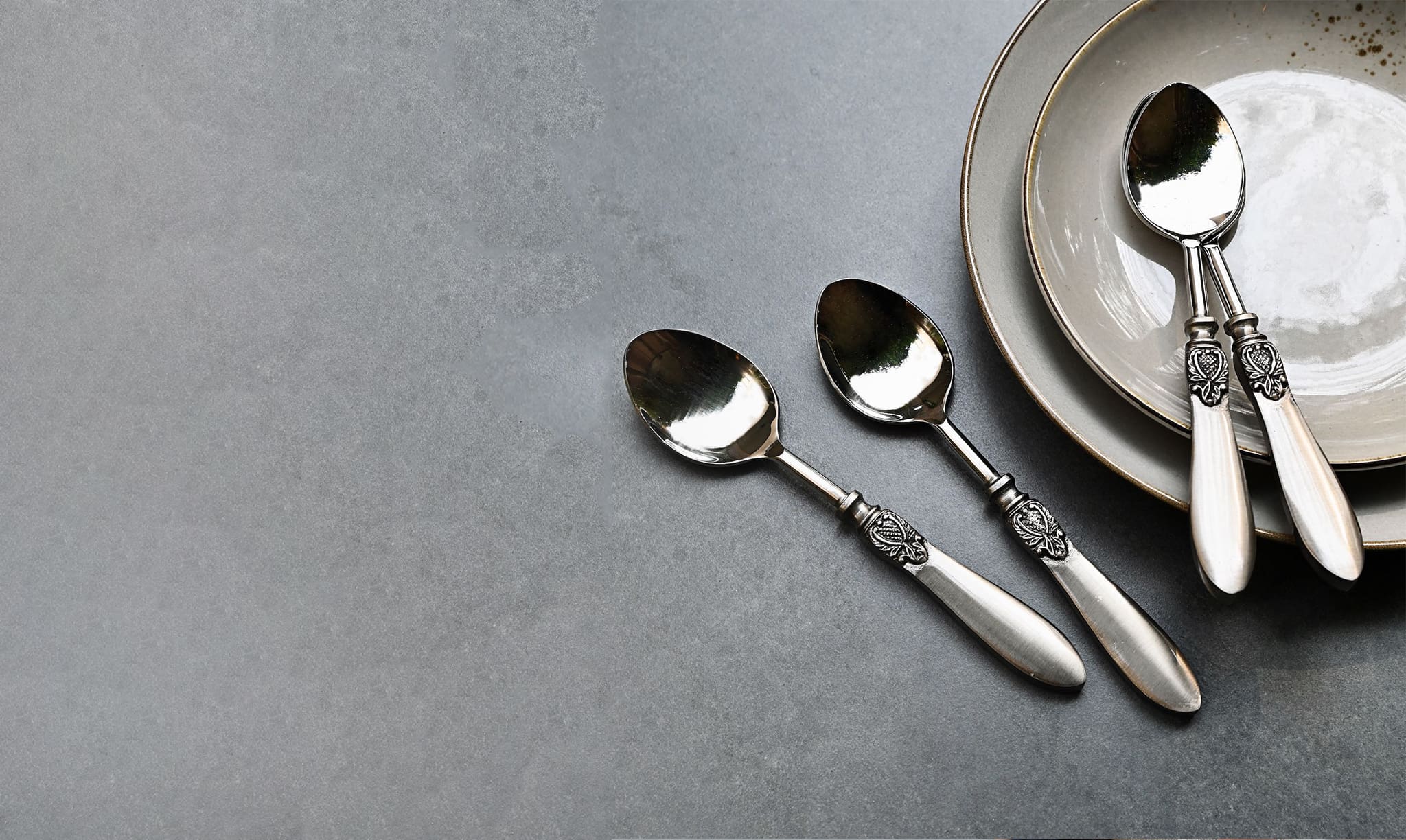
The cleanest image I know for it comes from a diner in 2003.7 A writer named Christine Miserandino had lupus, and a friend asked her what it was like to live with. Miserandino had been asked before, and no answer had ever landed. This time she gathered up every spoon on the table and handed them across. Here. You have lupus. A dozen spoons. Each ordinary task of a day cost one. Showering, a spoon. Cooking, a spoon. The supply was fixed, and only the woman holding the spoons could see how few were left.
The chronic-illness world made the word spoonie its own. I borrow it carefully, because most of the people who reach me do not have lupus. They have ordinary lives that have quietly run out of ordinary spoons.
Picture one woman, the same woman, across a life. At twenty-five she has whole evenings and a body full of appetite and no idea yet how to spend either. At thirty-eight she has two children in primary school and an evening that is a sliver, fought over with her partner or against her own exhaustion. At fifty-five her mother has started forgetting her name, and the evenings go to phone calls and the long Sunday drive to the care home. At sixty-eight she is retired in a small house in Spain, with the afternoons handed back to her, slower and emptier than she had imagined. Same name. Same woman, more or less. Four different relational systems, because four different lives, with four different amounts left to give.
A new relationship asks for spoons. Attention, patience, the hours after dark, the inner room to feel what another person is feeling. When those are already spent on a child who won’t settle, a parent who is disappearing, the partner asleep beside her, there is nothing left to lend. She has not stopped being the kind of woman who wants it. A spoon you do not have cannot be handed across the table.
Is it lack of capacity, or is it fear?
None of this means everyone is endlessly fluid, or that no one is really monogamous or really polyamorous. Some people have a durable lean, a direction they tend toward when nothing is pressing on them. But a lean is not a life sentence, and it is not the same as a system your life can currently run. You can have a polyamorous heart and a monogamous year. The year only holds so many hours. The trouble starts when you mistake the season for the self, and grieve a self that did not die, only went quiet.
And there is a harder question, the one easiest to lie to yourself about. Is I don’t have the capacity true, or is it just a quieter word for fear? Sometimes it is fear. Sometimes I’m too tired to open our marriage means I am frightened of what I will feel when you touch someone else, and the tiredness does the avoiding so you don’t have to.
There is a way to tell, and it is in the body, not the argument. Avoidance brings relief. You dodge the thing you fear, the tension drops, and a small numbness moves in behind it. A real limit brings grief. When you truly cannot hold something you want, you do not feel lighter, you feel the loss of it. So if a decision leaves you relieved and a little dead, look again. If it leaves you clear and a little sad, you are probably telling the truth.
……………….
Which brings us back to the couple, and to the question they could not stop circling. Are we still the people who opened this marriage.
It is the wrong question, and I told them so, gently. They are and they are not those people, the way the woman at sixty-eight both is and is not the woman at twenty-five. The right question is smaller, and much harder to dodge. Not who are we. Just: is this a system our life can run, this year, with these children and these jobs and this little sleep. Maybe the honest answer is not yet. Or not now, but soon. Or no, and the grief of that is clean and survivable. None of those answers makes them a failure. They opened the marriage once because the life they had then made room for it. If they keep it closed now, it is because this life does not, yet. The disposition did not die. The conditions changed.
By the end of the session they were further from a decision than when they started. That was the point. They left holding a smaller, truer question than the one they walked in with. Not which kind of people they are. Just whether there is a Tuesday evening, this year, they could actually give to it.
There is nothing wrong with wanting more than one thing. There is nothing wrong with no longer being able to hold what you once held. The right relationship is not the most evolved one, and not the most traditional one. It is the one your life can actually afford, this year, with the spoons you actually have. That changes through a life. You are allowed to change with it, and so is everyone you have ever judged for changing.
Victoria Onken is a relationship coach for consensual non-monogamy and open relationships, based in Amsterdam and working online with clients across the US, UK, and Europe.
Footnotes
- Lisa M. Diamond, Sexual Fluidity: Understanding Women’s Love and Desire (Cambridge, MA: Harvard University Press, 2008). Diamond’s longitudinal study followed about a hundred sexual-minority women across about a decade; a majority changed how they labelled their sexual identity at least once over that span, and the shifts tended to follow relationships and circumstances rather than feel like deliberate choices.
- Sari M. van Anders, “Beyond Sexual Orientation: Integrating Gender/Sex and Diverse Sexualities via Sexual Configurations Theory,” Archives of Sexual Behavior 44, no. 5 (2015): 1177–1213.
- Helen Fisher, Why We Love: The Nature and Chemistry of Romantic Love (New York: Henry Holt, 2004). See also Helen Fisher, “Lust, Attraction, and Attachment in Mammalian Reproduction,” Human Nature 9, no. 1 (1998): 23–52, on lust, romantic attraction, and attachment as three distinct, independently operating systems.
- Stephanie Coontz, Marriage, a History: How Love Conquered Marriage (New York: Viking, 2005). Coontz dates the rise of the love-based, companionate marriage to the late eighteenth century.
- Ann E. Tweedy, “Polyamory as a Sexual Orientation,” University of Cincinnati Law Review 79 (2011): 1461.
- Christian Klesse, “Polyamory: Intimate Practice, Identity or Sexual Orientation?” Sexualities 17, no. 1–2 (2014): 81–99.
- Christine Miserandino, “The Spoon Theory,” ButYouDontLookSick.com (2003). The origin of the “spoons” metaphor for living with limited energy. Not an academic source, but the source of the image used here.
Common questions
Not the way sexual orientation is. Who you are drawn to tends to hold still across a life. How you arrange your relationships does not. Polyamory and monogamy are better understood as relational systems, living arrangements that answer to your circumstances, your stage of life, and what you have left to give. You can have a polyamorous lean and a monogamous year.
Yes, and it usually has nothing to do with a change in identity. A relational system shifts when its conditions shift: a new baby, a sick parent, a demanding job, less sleep, less time. The disposition can stay exactly where it was while the life around it stops having room for it. That is the system working, not failing.
Often because the spoons ran out. A new relationship asks for attention, patience, the hours after dark, the inner room to feel what someone else is feeling. When those are already going to children, work, or an exhausted partner, there is nothing left to lend. The wanting did not disappear. The capacity to spend on it did.
Check your body, not your argument. Avoidance brings relief: you dodge the thing you fear and a small numbness moves in behind it. A real limit brings grief: you feel the loss of something you actually wanted. If a decision leaves you relieved and a little dead, look again. If it leaves you clear and a little sad, you are probably telling the truth.
No. Closing can be the honest answer to the life you are living this year. You opened the relationship once because the life you had then made room for it. If you close it now, it may be because this life does not, yet. Conditions change. You are allowed to change with them.
June 18, 2026
Leave a Reply Cancel reply
@2026 victoria onken
brand + website by i know a gal
Victoria Onken is a relationship coach helping individuals and couples navigate consensual non-monogamy, open relationships, and complex relationship transitions with clarity, care, and thoughtful support.

Based in amsterdam
coaching worldwide online
open to travel for live events
Be the first to comment